cooking with nothing

creating tasty food with limitations

Veggie pasties

Pasties are usually fat-laden and greasy so here’s a makeover that’s neither, but still super tasty! The pastry can easily be used for different recipes such as samosas.

Makes 8 pasties

For the pastry:

  • 110g x whole-wheat or spelt flour 
  • 120ml x water
  • Pinch of salt
  • Pinch of cumin
  • 2 TBSP x olive oil

For the filling:

  • 1/2 x eggplant, chopped into 2-cm squares
  • 1/2 x red capsicum, chopped into 2-cm squares
  • 100g x mushrooms, diced
  • 1 x onion, diced
  • 2 x garlic cloves, crushed
  • 1 tsp x cumin seeds
  • 1/2 tsp x dried oregano
  • 1 tsp x smoked paprika
  • Pinch of salt and pepper

Put the chopped eggplant into a colander and sprinkle with salt. Set aside while you make the dough.

Mix the dry pastry ingredients in a food processor then add the water in a steady stream until a dough forms. Knead well – adding a little extra flour if the mixture is too wet – for about 5-10 minutes until the dough becomes elastic. Set aside.

Heat some olive oil in a frying pan over a medium heat. Add the onion, cumin seeds and garlic and cook until the onion turns translucent. Add the rest of the veges plus the smoked paprika and oregano and cook until tender.

Preheat the oven to 220°C. Divide the dough into 4 and roll each piece into a smooth ball. Using your hands, form the ball into a flat circle. Dust a working surface with flour so the dough doesn’t stick and roll the circle into a thin patty (like a tortilla) with a rolling pin. Cut the circle in half. Take one of the half circles and make a cone shape, starting at the centre of the cut side to make the point of the cone. Wet the edges with a little water to glue the overlapping edges together.

Put around a TBSP of filling into the cone, moisten the top of the inside edges and close the cone, pressing the edges to seal it. Brush the outer surface of the pastie with olive oil and place on a baking sheet. Repeat the process to make 8 pasties. Place in the oven and bake for 20 to 25 minutes or until the pasties are nicely browned. 

Serve as a snack, or as a light meal with some fresh guacamole a big green salad or steamed greens.

Mexican potato bake

I absolutely love Mexican food. I’m used to making vegan versions without cheese, sour cream and all those added extras, but it was quite hard to get my head around making an optimal food combining meal. Usually there’s a mixture of starches (tortillas, potatoes) with starchy proteins (black beans) and acid (tomatoes). Here’s my as-Mexican-as-I-can meal to satisfy my cravings for now! You could also use the mixture with flatbreads to make wraps, or turn it into a protein-based Mexican stew by removing the potatoes and slow-cooking the rest with some black beans.

Note: Most people tolerate mixing starches (like potatoes) with starchy proteins (like dried beans) quite well, but I’m following a strict food combining method for my ultra-sensitive digestive system. 

Serves 6

  • 4 x medium potatoes, scrubbed well and cut into 1-cm slices
  • 1 tsp x olive oil
  • 2 x onion, diced
  • 4 x garlic cloves, crushed
  • 2 x chillies, finely diced
  • 1 tsp x ground cumin
  • 1 tsp x dried oregano
  • 2 tsp x smoked paprika
  • 100g x mushrooms, diced
  • 1 x courgette, diced
  • 1 x red capsicum/pepper, diced
  • 2 x fresh ears of corn, kernels removed
  • A few handfuls of spinach, chopped
  • A small bunch of coriander, finely chopped
  • 2 TBSP x nutritional yeast (optional)

Preheat oven to 200°C. Separate potato slices and place in a saucepan of cold water, then bring to the boil. Cook for around 5 minutes, or until the potato begins to cook but still holds it shape. Drain the slices and set aside.

Meanwhile, heat the oil  in a large pan over a low heat and fry the onion and garlic until soft. Add the cumin, chilli, smoked paprika and oregano and cook, stirring, until fragrant. Add the other vegetables (except potato), mix well, and simmer for 15 minutes (or until softened), stirring frequently. Add the coriander and stir through. 

Spoon one quarter of the vege mixture in the bottom of a 1.5-litre ovenproof dish. Arrange a third of potato slices in a layer over bean mixture. Continue to layer, alternating bean mixture with potato and finishing with a bean layer. Top with a sprinkling of nutritional yeast for an extra – almost cheesy – crunch.  

Bake in preheated oven for 30 minutes (or until the potatoes are nice and soft). After 15 minutes, remove dish from oven and prick the surface deeply all over with a fork. This allows heat and sauce to circulate through dish. Return to oven for remaining 15 minutes. Serve with a side of steamed vegetables or salad and freshly made guacamole. 

Portabello mushroom burgers

As I mentioned in a recent post, I’ve started a food combining diet to try and help my IBS. I always use the first week of a new ‘diet’ to phase things in so I get the hang of doing it right. It’s taking a bit of adjusting, as I almost have to re-wire my brain to ignore most of the common, intuitive food pairings we’ve grown up with. 

So far I’ve made carrot, ginger and coriander soup (starch meal) and this delicious miso soup recipe from Veggie Num Num (protein meal). Breakfasts are a tad repetitive; so far, it’s been oats and cinnamon or buckwheat grits and cinnamon. This week changed things up with some sprouted spelt bread with avocado and basil to break things up.

Since mushrooms are a non-starchy vegetable, they can be combined either with proteins or starches. I opted for the former to make a portabello burger and served it alongside corn on the cob. I also chose to wilt my greens before adding them to the burger as I’m avoiding raw food until I can warm myself up a bit from my naturally cold state – another piece of advice from Paul Pitchford’s Healing With Whole Foods.

  • 2 x portabello mushrooms
  • 1 x garlic clove, crushed
  • 2 tsp x organic butter (or 2 TBSP x olive oil for dairy-free/vegan)
  • ½ tsp x fresh rosemary, finely chopped
  • 2 slices x 100% spelt bread (or gluten-free bread if necessary)
  • 2 x onions, finely sliced
  • 1 TBSP x apple cider vinegar
  • Greens (I used rocket and alfalfa)

Pre-heat the oven to 200C. Combine the garlic, rosemary and half the butter/olive oil to make a paste. Spread it between the two mushrooms, then wrap tinfoil around the base of the mushrooms leaving only the tops exposed. Cook in the oven until the mushrooms are soft all the way through. This should take about 20 minutes.

Meanwhile, put the remaining butter/olive oil in a frying pan on medium and add the onions. Cook until the onions start to soften then add the vinegar. Wait until the liquid is burnt off and the onions soft. Set aside.

Toast the spelt bread, wilt the greens if you don’t want them raw, then assemble the burgers. Start with some sautéed onions, the greens, and finish with the mushrooms.

Potato and pea curry

As I mentioned in my last post, I’m trying out food combining for my IBS. Even for those with digestive tracts of steel, food combining can help you get more vitamins and minerals out of what you’re eating (and there are far less strict versions than the one I’m following). The first week is taking a bit of adjusting, but I’ve made carrot, ginger and coriander soup (starch meal) and this delicious miso soup recipe from Veggie Num Num (protein meal). 

Last night’s meal was potato and pea curry, which I served without rice for me (I shouldn’t mix two starches in one meal) and with rice for the boyfriend.

Serves four

  • 1 kg x potatoes, diced into 3-cm cubes
  • 2 tsp x mustard seeds
  • 2 TBSP x coconut oil
  • 2 x onions, sliced
  • 2 tsp x fresh ginger, grated
  • 2 x garlic cloves, crushed
  • 2 tsp x turmeric
  • 1/2 tsp x chilli powder
  • 2 tsp x ground cumin
  • 2 tsp x garam masala
  • 3/4 cup x water
  • 3/4 cup x frozen peas
  • 1/2 tsp x white pepper
  • Sea salt, to season
  • A bunch of fresh coriander, finely chopped 

Warm a lidded pot or wok on a medium heat and cook the mustard seeds until they start to pop. Add the coconut oil, onions, garlic and ginger and cook, stirring, until soft. Add the potatoes, turmeric, chilli powder and garam masala. Stir until the potatoes turn yellow (from the turmeric). Add water and simmer, covered, until the potatoes are just tender. Stir occasionally. This should take around 20 minutes. Add peas, white pepper and salt to season and stir to combine. Cook for a further 3-5 minutes until the peas are warmed through, the potatoes are completely cooked, and the liquid has reduced to a nice thick sauce. Sprinkle with fresh coriander and serve. 

Paul Pitchford’s Food Combining Theory

Special thanks goes out to both my sisters for this post. My older one suggested reading Paul Pitchford’s Healing with Whole Foods and my younger one bought it for me for Christmas. In a recent post I thought I was onto a winning streak by following the advice in Eating for IBS. I was also clear I had my concerns about it. Pitchford’s book reinforced those concerns and steered me away from solving my issues with soluble fibre.

So now, after what feels like the gazillion books I’ve read to try and find a method that suits me and is a healthy, long-term solution, I’m back to food combining. Man, I feel like such a yo-yo dieter! I’m only in week one so I can’t tell you how it’s working yet (I have to try it for at least 6-8 weeks) but it’s not the only piece of Pitchford’s advice I’m following. He also discusses eating for your ‘type’. I was particularly interested in the cold vs. heat section.

I’m such a coldy. Cold feet, cold hands, always cold, cold, cold. Whereas my boyfriend is most definitely a hot person. My tummy has shown me too much raw food doesn’t agree with me, and part of this may be because I’m a cold person who needs to eat more warming foods (usually things that take longer to grow, such as root vegetables). 

I’ve dabbled with food combining before, but was only following loose advice. If you have serious digestive issues, which I do, Pitchford suggests a strict regime. Following the chart above, you should only combine foods directly connected by arrows. In addition, I should only have one type of protein per protein meal, one type of starch per starch meal, and one type of fat in either of those meals. It’s very hard to get my head around as I know it goes against many food combinations we’re used to. Think eggs on toast (protein on starch), salmon sushi (protein in starch), nuts in cereal (protein with starch).

I was particularly interested to learn about fruit combinations. Don’t mix acid fruits with sweet fruits (eg. kiwifruit with banana). Note that tomato is also considered an acid fruit. The exception is that these fruits pair well with lettuce and celery, so a lettuce and tomato salad is still okay. 

So the next series of meals I post will either be starch or protein based, but not both. Those with stronger GI tracts than me can throw some lentils into my starch-based meals or some potatoes alongside the protein. And one day, after all this to-ing and fro-ing, I’ll hit this nail on the head! 

Homemade Chai

Sometimes I miss coffee. My boyfriend still has his daily fix and often waves the jar of freshly ground beans under my nose, just so I can get a whiff of the good stuff. But it’s just no darn good for my digestive system so alas, coffee and I…we are no more. 

I’ve found a pretty darn good substitute with chai, though (and a good use for our milk frother!). Here’s a recipe from Eating with IBS that is packed with soluble fibre and soothing spices; it’s the perfect after-dinner treat. This time it was me waving the cup under my boyfriend’s nose.

  • 1 TBSP x fennel seeds
  • 1 TBSP x cardamon seeds (not in the pods. If they are you can break them up a bit with a mortar and pestal to release the aroma) 
  • 1 TBSP x cloves 
  • 2 x cinnamon sticks, broken into pieces 
  • 1 cup x rice or oat milk (the book suggests soy but I prefer oat or rice. Almond milk is also a good option)
  • 1 tsp x organic, unpasteurized honey (or maple syrup for vegans)

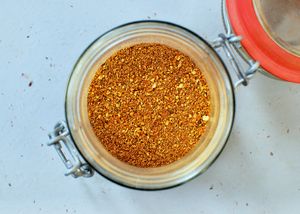
Combine the spices. I put them in a screwtop jar and shake to mix, as you only need 1 TBSP per serving. Leave the rest in the jar for later. 

Bring a saucepan with 1 TBSP of the spice mixture and 1 cup of milk slowly to the boil. Remove from the heat and let it steep for at least 3 minutes. Strain, stir in the honey, and serve. You can easily get a few servings out of 1 TBSP of spices so feel free to make enough for two. I like to froth the final result and sprinkle a little cinnamon on top. 

Gingerbread makeover

This time last year, when I didn’t know as much about what triggers my IBS, I posted a Christmas recipe for gingerbread with blue cheese and roasted pear. For me, the flavours of gingerbread – cinnamon, cloves and, of course, ginger – really evoke the festive season.

Now that I’ve ruled out dairy and avoid refined sugars, I decided to adapt this delicious treat to suit. Instead of serving it with blue cheese, I’d opt for roasted pears and walnuts.

It’s adapted from a recipe by Heather Van Vorous, author of Eating for IBS. I wrote an earlier post on Heather’s advice here, which is all about the role that soluble fibre plays in managing IBS. She also recommends eliminating red meat, foods high in fat and caffiene, amongst other things. At the time I read her advice, I was reading so much conflicting information that I didn’t know what to believe. But after a few months of trying out different food orders and combinations and unable to shake the last of my symptoms, I decided to give the soluble fibre theory a go. It’s only been one week and I’ve already noticed a huge different. So maybe it is the final missing puzzle piece?!

I’ve mentioned before that the one thing I don’t like about the recommendations in Eating for IBS is the amount of refined carbohydrates like white bread and the mentality towards refined sugars, which are theoretically ‘safe’ (meaning they are unlikely to trigger an attack). The good news is that brown rice and quinoa are also on the safe list, so you don’t need to succumb to the bread brigade to manage your symptoms. In saying that, I have used white flour in the recipe below as I haven’t tested yet whether suitable substituions, such as spelt, trigger my IBS. 

I was also a little worried about the reduction in greens and raw foods I seemed to be eating over the week. The good news is, juicing strips vegetables of most of their insoluble fibre, so fresh vegetable juices are also safe for a lot of IBS sufferers, including me thankfully! Adding a bit of ginger makes them even more soothing for the stomach. This means I can supplement a soluble fibre-rich diet with vegetable juices to get more nutrients without the pain and suffering. So, from now on you might see a lot of soluble fibre-based meals but, hopefully, you won’t even notice the difference! 

Makes one standard loaf 

  • 1 1/2 cups x flour (you could use spelt instead of wheat if you prefer)
  • 1 1/4 tsp x baking soda
  • 1 tsp x ground cinnamon
  • 2 tsp x ground ginger
  • 1/2 tsp x ground cloves
  • 1/2 tsp x ground nutmeg 
  • 1/8 tsp x ground sea salt 
  • 1/2 cup x honey
  • 10 x fresh dates
  • 1/2 cup x freshly squeezed orange juice, strained of any pulp 
  • 4 x egg whites
  • 3 TBSP x coconut oil or olive oil 
  • 1 1/2 TBSP x freshly grated ginger 
  • 2 tsp x vanilla 

Preheat oven to 175C. Spray a loaf tin with olive oil or rub with coconut oil and set aside. Sift the first 7 dry ingredients into a large bowl and whisk until throughly combined. Add the second batch of 7 ingredients (honey through vanilla) to a food processor and blend until smooth. Add the wet mix to the dry and stir a few times with a wooden spoon, being careful not to overmix. 

Pour the batter into the greased tin and bake for 30-40 minutes, or until a skewer inserted into the centre comes out clean. Cool on a wire rack and serve. 

Leek and potato soup

It’s hardly a new combination; leek and potato soup has been satisfying the bellies of many a warmth craver since long before my time. But this week it was all I felt like cooking because it’s cheap, tasty and quick. Here’s a vegan recipe that, when blended, is deliciously creamy. 

Serves four to six

  • 1 TBSP x extra-virgin olive oil
  • 2 leeks, well washed and thinly sliced
  • 2 x onions, diced
  • 1/2 tsp x sea salt 
  • 3 x garlic cloves, crushed 
  • 1/2 tsp x nutmeg 
  • 500g x potatoes, peeled and cut into 2-cm cubes
  • 3-4 cups x vegetable stock (use only 3 if you want a thicker soup)
  • Fresh thyme leaves or chives to garnish (optional) 

Heat a soup pot over low-medium and add the oil. Add the leeks, onion and salt. Cook, stirring often, for about 5 minutes until the onion starts to turn translucent. Stir in the garlic and nutmeg and cook for a further minute. 

Add the potatoes and vegetable stock, then cover with a lid and bring to the boil. Once boiling, lower the heat to a simmer and cook for about 20 minutes. Season with salt and pepper if needed and serve as is or blend until smooth. Garnish with fresh thyme leaves or chives (optional). 

Brussel sprouts with spiced pecans

We’re a mixed bag at Thanksgiving here in Amsterdam. Hosted by an American with a sprinkling of Brits, a few Dutchies and a handful of Kiwis, the Thanksgiving tradition only began for me once I moved to the Netherlands. This year I abandoned my carrot souffle, a staple of the past few years, and created winter-spiced brussel sprouts. It’s a perfect side dish for Christmas, too! The recipe can be vegan if maple syrup is used instead of honey and the orange butter is ignored at the end.

Serves 10 as a side

  • 1kg x brussel sprouts. Cut the larger ones into quarters and the smaller sprouts in half
  • 1 x onion, finely diced
  • 2-3 garlic cloves, crushed
  • olive oil
  • 1/4 cup x honey or maple syrup
  • 1/4 cup x port
  • 2 tsp x cinnamon
  • 1 x orange
  • 1 cup x pecans
  • salt and pepper to season
  • 50g x organic butter (optional) 

Preheat oven to 230C. In a large pan, warm some olive oil and gently brown the onions and garlic. Add the brussel sprouts with a good dash of salt and pepper and cook, stirring continuously, for about 10 minutes. Transfer to a baking dish and place in the preheated oven. Cook for another 15 minutes until browned. Make sure you don’t overcook the sprouts; they should retain some bite.

Zest the orange, set the zest aside, then squeeze the juice of one half the orange into a saucepan on a low heat. Add the honey/maple syrup, port and cinnamon. Warm until well combined. Toast the pecans in a dry pan until browned. Transfer to the orange juice/port/cinnamon mixture. The mixture will bubble and pop. Take off the heat and set aside.

If you want to make the dish a bit richer, combine the zest of the orange with about 50g of slightly softened organic butter. Set aside until you’re ready to serve.

If you don’t want to use butter, stir the zest through the oven-baked sprouts. Pour over the nutty syrup mixture and the juice of the other orange half. Season well with salt and pepper and serve either warm or at room temperature. If using butter, serve the sprouts warm with a knob of orange butter melted over top.

Fresh pea dip

I’m back from a holiday in Switzerland where they’re apparently not so fond of veges. Arriving home late on a Sunday night I knew I needed to whip up something quick and healthy for the next day’s lunch. The result? A fresh pea dip/hummus that I spooned into iceberg lettuce cups with avocado and cucumber. Green equals goodness! You could also dip in some carrot/celery sticks or use as a spread on rice crackers. Bonus: the recipe is also hypoallergenic. 

  • 1 cup x fresh green peas (you can also use defrosted organic frozen peas)
  • A handful of fresh basil leaves
  • 1/2 x lemon, juiced
  • 2 x garlic cloves, 
  • 1 TBSP x tahini
  • A dash of extra virgin olive oil
  • Salt and pepper, to season

Combine all the ingredients except the oil, salt and pepper in a food processor and blitz. Then blend on a low setting while drizzling in enough olive oil until the dip reaches the desired, hummus-like consistency. Season with salt and pepper and serve. Any leftovers can be stored in the fridge for a few days.